
Nurturing Infant Joy, Connection and Curiosity in the Earliest Years - Part 1 Connection

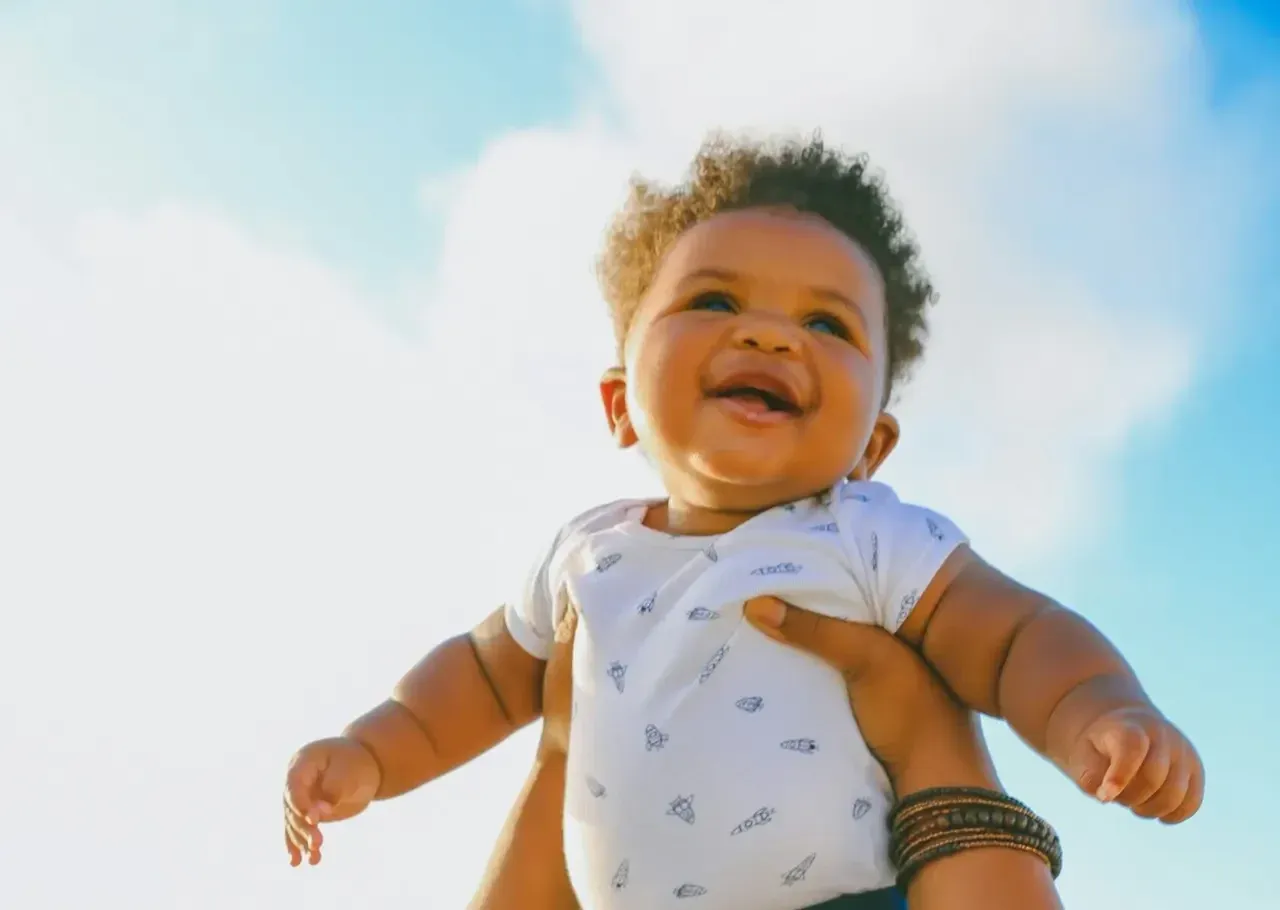
On Friday 6th June 2025, I had the privilege of running a workshop at the Early-Years.org 60th Anniversary Conference at Stranmillis College, Belfast. The workshop was called "Laughing Babies: Nurturing Infant Joy, Connection and Curiosity in the Earliest Years", and over the course of three lively sessions we explored how laughter can offer profound insights into the inner lives of babies. In this first of three blog posts, I want to focus on connection—the bedrock of human development and the unspoken language babies use to pull us into their world.
The best way to make a baby laugh is to take them seriously.
Laughter is one of the earliest and clearest signs of connection in babies. Long before they can speak, babies laugh to show that they're engaged, delighted, and—most importantly—that they feel safe and seen. One of the key messages I try to share is that the best way to make a baby laugh is to take them seriously. That's because laughter is never random; it's relational. It arises in the beautiful loop between baby and caregiver, when both are attuned to each other. What we perceive as a baby laughing at a silly noise or a peekaboo face is, in fact, a powerful signal: I see you, I feel you, let's stay here together a little longer.
We often tell ourselves stories about human evolution that focus on hunting, tool use, or physical dominance. But that's not what really set us apart. Compared to our closest relatives, we are not particularly strong, fast, or fearsome. What we are is social—ultra-social. Our survival didn't depend on our ability to kill prey but on our ability to cooperate, to care, to communicate. It was our social bonds, not our spears, that allowed us to raise helpless infants, form alliances, and build cultures. Babies were never just passive passengers in this journey. They were central to it—pulling adults into caregiving relationships and rewiring our species for deeper connection.
That shift is reflected in our brains. Over the last two million years, the human brain tripled in size. Evolutionary psychologist Robin Dunbar argues that this explosion wasn't driven by abstract reasoning or hunting strategies, but by the need to manage increasingly complex social relationships. The number of people we could meaningfully connect with—what's now called "Dunbar's Number"—grew alongside the size of our neocortex. But relationships take time and effort to maintain. Other primates rely on grooming to cement bonds, one-on-one. Humans developed more scalable tools—laughter, vocalisation, music, and eventually language. Laughter, in particular, remains one of the fastest and most efficient ways we signal that someone belongs.
Babies instinctively tap into this ancient system. They are the happiest people on the planet, and it's no accident—they're built to recruit others into joyful, secure relationships.
A striking illustration of laughter's social function comes from our study (Addyman, Fogelquist, Lenkova & Rees, 2018). In this experiment, preschool children watched funny cartoons either alone, in pairs, or in groups. The results were clear: children laughed eight times more and smiled nearly three times more in company than alone—with no difference between pairs and groups. The take-away? Even one partner can transform laughter from a reflex into a social signal. You can read the full study here.
Peekaboo is a perfect example. On the surface, it looks like a simple game of surprise. But babies begin to enjoy it well before they truly understand object permanence. What they really respond to is the rhythm of attention and reunion. The moment your face comes back into view—there you are!—they explode with joy. That burst of laughter is a release, a celebration of trust. As one participant in the afternoon session put it, "It's like they're saying, 'you didn't disappear after all!'" And each time this happens, the baby is learning that people are predictable, kind, and fun.
In our group discussions, practitioners shared wonderful stories of connection through laughter—one child who would burst into giggles whenever someone opened the blinds, another who laughed whenever a staff member put on their hairnet, and one baby who laughed every time their keyworker sneezed. These were not just random responses, but shared rituals of attention, delight and attunement. The laughter said, "I know you. I'm with you."
Of course, not every child laughs easily or often. That doesn't mean they're not capable of joy. It may simply mean that they need a different route into connection. In the workshop, we explored how slowing down, mirroring micro-cues, and reducing sensory noise can help build those bridges. Strategies like "intensive interaction" allow us to respond to the subtlest signals—eye flickers, body stillness, tiny shifts in breath or tone—that show a child is present and open to engagement. As one table noted, "sometimes the child doesn't laugh out loud, but they smile with their whole body."
What became clear across both sessions was that laughter isn't just a happy by-product of connection—it is often the clearest sign that connection has happened. In early-years settings, these moments of laughter offer real-time feedback on our practice. They help us spot when a child feels safe, seen, and ready to explore. And they help us notice when something's working—when our presence, our pace, our play is truly landing with the child in front of us.
In your own practice, try asking:
When did a baby last laugh with you—not just at you? What were you doing just before? What were they doing just after?
These moments, however fleeting, hold the key to deeper connection. And once that connection is in place, everything else—learning, curiosity, resilience—can begin to unfold.
In the next blog post, I'll be exploring curiosity, and how laughter and surprise play a key role in how babies learn about the world. But it all starts with connection. Because before babies can learn, they need to feel safe. And before they can feel safe, they need someone to see them, delight in them—and laugh with them.